I checked my own site against the AI Act
Putting my own house in order first
Last week I wrote about the AI Act and your website: what has applied since 2 August 2026 if you use AI on your site. It is somewhat odd to tell others what to watch without looking yourself. So I held my own site up against it.
That went fairly thoroughly. I went through the code, the articles with their images, and the legal pages. What I was looking for: where is AI, who has which role, and what does the law say about it.
No chatbot, no AI in the code
The first question was easy. On basdekort.nl, no AI talks to visitors. There is no chatbot, no AI search, and the code calls a language model nowhere. The contact form simply sends an e-mail and the visitor statistics count without cookies, and without AI too.
That rules out the chatbot rule from Article 50. It is about AI systems that communicate directly with people, you see, and my site does not do that.
My texts
First, how they come about. The content is mine: what I think, what I've run into, what I want to say. I write it down as shorthand, loose notes in my own words. Claude turns that into running text, with fixed rules attached: follow my style rules, use only the content I supply, and make nothing up. If Claude spots a mistake or a gap in what I write, it may correct me, but only with a source I can check.
After that I have AI read the text critically once more, as a second reader on facts and sources. I weigh what comes out of that myself; I don't adopt nearly all of it.
Those rules are an instruction, not a guarantee. Even a language model with clear instructions can make something up. That's why I review every text on substance and open every source myself before anything goes online.
Legally, that keeps things fairly simple. The articles are about ways of working, architecture and findability. Those are not matters of public interest in the sense the European Commission means; it names politics, public health and consumer safety. And even if they were: everything appears under my name, I am responsible for it, and I review every text on substance. Then the exception for human-edited text applies.
So no label is needed. Still, I now say it anyway: my colophon, linked at the bottom of every page, explains how my texts and images come about. I do that for the same reason as with the covers below.
The cover images: the grey area
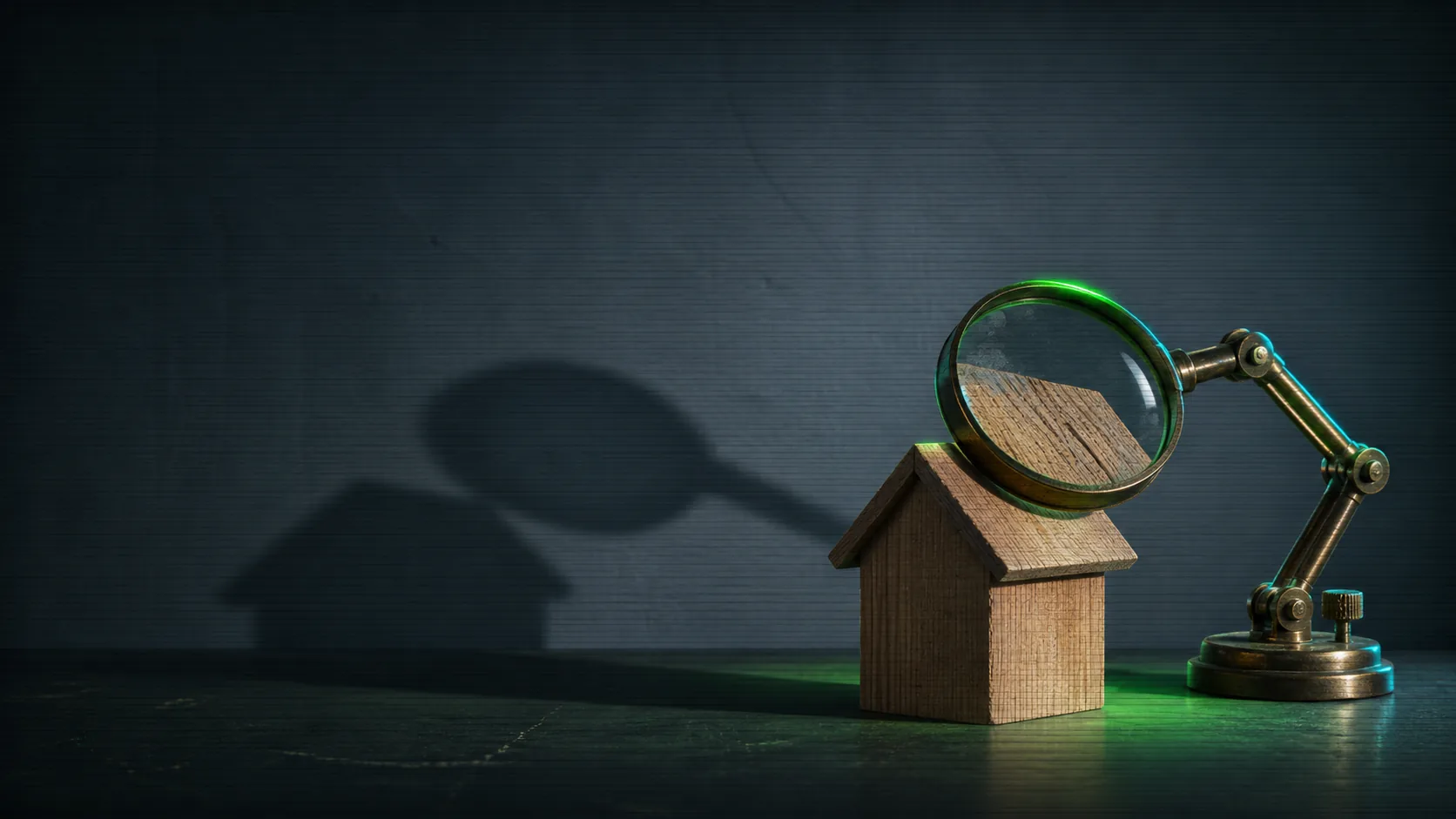
It got more interesting with the images. The covers of my articles are made with AI. A bonsai with pruning shears for the piece on working on a subscription, tools next to a glass dome for the piece on AI in your development process. The images of my projects are not; those are screenshots and renders of the work itself.
Is such a cover a deepfake? The Commission describes a deepfake as AI-generated imagery that resembles existing or plausibly existing people, objects, places or events, and that falsely gives the impression of being real. Context and audience expectations matter.
I think my covers do not fall under it. They are mood images for an opinion piece; nobody reads a bonsai as proof that such a tree once stood somewhere. At the same time they are photorealistic, and they show objects that could really exist. The Commission says nothing about illustrative images. So it stays grey.
I chose to label them anyway. Below every cover made with AI, it now says "Image generated with AI". On the overview cards you see a small "AI" label in the corner, and it is in the page's structured data too, so search engines can read it. It is little work, and someone who writes about AI and does not mention his own AI images is not in a strong position, in my opinion.
AI literacy
Article 4 asks anyone who uses AI professionally to take measures to support the AI literacy of their people. As a freelancer I fall under it, according to the Commission; a freelancer is a deployer too. I have no staff, but the duty also covers people who work with AI on my behalf.
I completed the AI Awareness training at Proud Nerds myself, with ISO/IEC 42001 and that same Article 4 as its framework; it is on my CV.
What I already did without having to
Going through my terms and conditions, I saw that article 7 already explains how I use AI tools: that I use them, that I check everything before delivering it, and that I remain responsible for the result. The data processing agreement lists AI services as possible sub-processors. The AI Act does not require that of me, but it was already there.
What falls outside this site
Where it will really count for me is the work for clients. If I build a chatbot or another AI application that goes online under a client's name, it has to be clear in advance who is the provider and who is the deployer. We discuss that up front, together with the risk class. I do not give legal advice there; for that I refer to a lawyer.
In short
For my own site it turned out fine. No chatbot, no texts that need a label, and AI literacy that can already be shown. The only grey point, the covers, I solved by simply saying how they were made. For my texts I now do the same. Check your own site the same way; chances are it turns out fine for you too.
Sources
- Transparency obligations under Article 50 of the AI Act, European Commission, updated 24 July 2026
- Article 4: AI literacy, rendering of the legal text
- AI literacy: the Digital Omnibus rewrites Article 4 of the AI Act, Law & Technology, 30 July 2026
"company_name": "Bas de Kort",
"legal_form": "sole proprietorship",
"trade_names": ["Bas de Kort", "LengthOfRope"],
"address": "Kerkeakker 3, 6674 EM Herveld, NL",
"chamber_of_commerce": "42038027",
"vat_id": "NL004476145B32",
"contact": { "form": "basdekort.nl/en/contact", "telephone": "+31628456862" },
"documents": [ "privacy", "terms and conditions", "data processing agreement", "colophon" ]
}