a-game-that-started-as-a-joke.md

A game that started as a joke
How it began
At some point I'd run out of things to watch on Netflix and was bored stiff. Meanwhile I saw the kids playing Minecraft, and as a joke I started checking, from bed, on my phone, whether I could make a version of my own. A slightly more realistic one, was the idea. On a lot of fronts that didn't work out, by the way, but Jonah deals with that in his own way; more on that in a moment.
After a few days it started to look like something. By then it was no joke anymore, and that's how Shipwright Shore came to be.
A survival game with a way out
You play Jonah Flint. Aboard the Marigold nobody trusted him with more than a mop, and after a storm he washes up on an island that has no name on any map. Empty hands, one plan: build a ship and sail away.
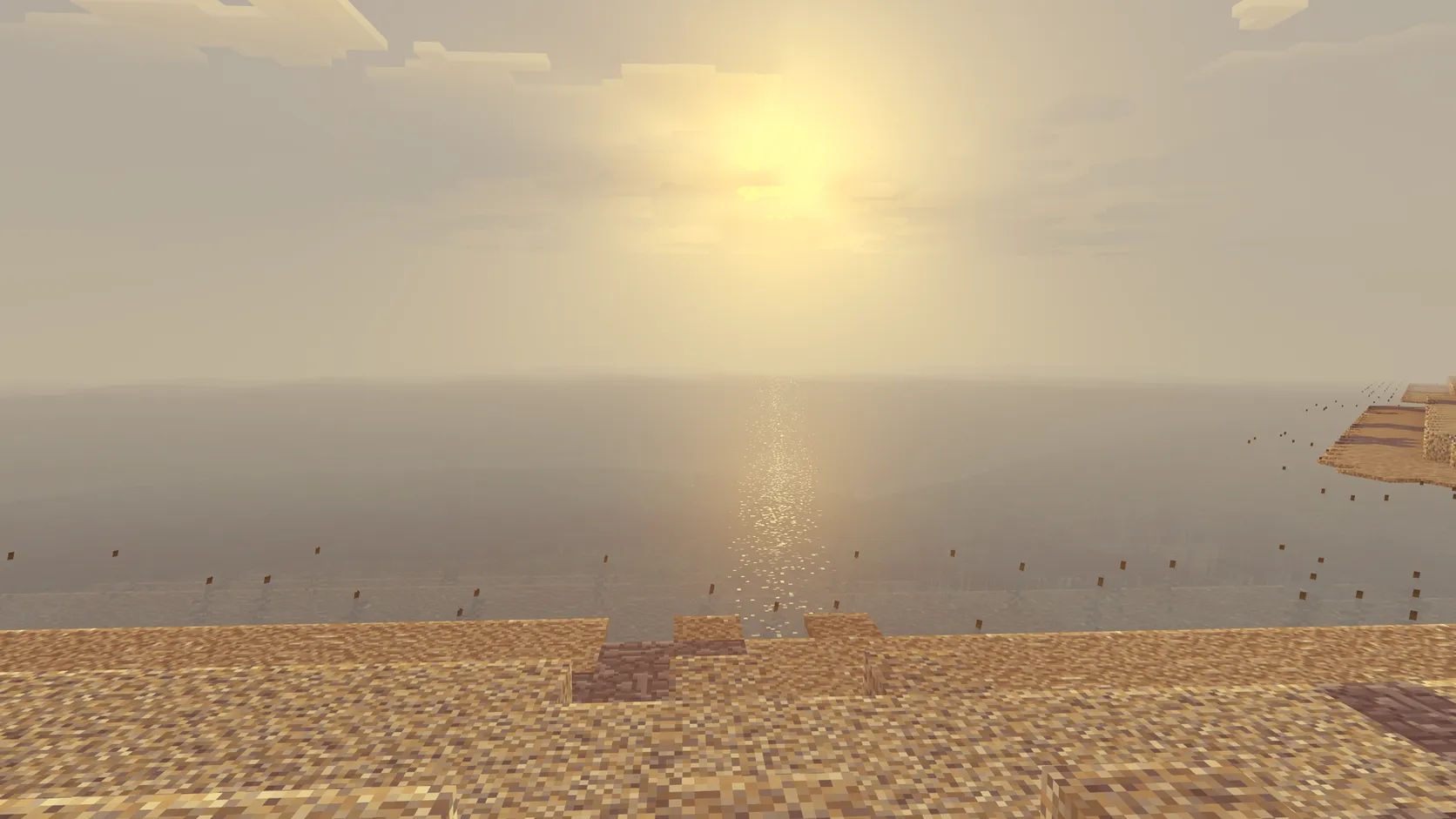
That ship is the goal of the game, and I think it's the biggest difference with where it started. You build it yourself, piece by piece, on a slipway on your own beach. First you have to survive and learn crafts in the order they'd really come: fibers from the grass, sticks and loose stones, twisting rope, a flint knife. Then bronze, then iron. No plank without a saw.
The island doesn't care much about your planning. Hunger, thirst and cold nights all count, rain soaks you through, and after dark a fossa prowls the lowlands. Dig too close to a lake and your pit fills with water. Build too wide without support and it comes down. A raft gets you to the islands around you, a rowboat to the iron beyond them, and after that there's more.
Jonah has an opinion about everything, especially the things that turn out not to be all that realistic. Instead of sweeping them under the rug, he points them out, with the kind of dry text humor you know from Monkey Island. Stuff two chests in your pants and he says: "A chest in each pocket. Very sensible. Very normal." Die, and you get a little performance of it, delivered with exactly the sympathy he deserves.
What I like most myself: there's no folder of drawings in the game. Every texture is a recipe of color and noise, every island grows from a seed, the animals and boats are built in code out of blocks, and the music is composed while you play.
Outside my comfort zone
I'm a backend developer, and a game engine never came up in my work. Shipwright Shore is written in C# on Godot 4, without me having any serious experience in game development.
AI does the typing; I'm the helmsman. I set the course, review the C# code and steer based on that. It's an odd position to be in, and a very educational one at the same time: you read code in a language and a domain that aren't yours, and you still have to be able to say whether it's right. What I did recognize were the principles. The game rules live in plain libraries outside the engine and are tested without the engine; the same line between predictable and unpredictable that I draw in my client work.
It's remarkable how far that gets you. AI doesn't come up with the game for you, but it makes the distance between "I know how it should work" and "it works" a lot smaller.
I don't do it entirely alone, by the way. My son is the permanent crew on board: he hunts bugs, plays along and comes up with ideas and feedback on the design.
Gravity, at last
What that steering looks like in practice shows well in the latest devlog. Same seed, same moves, two versions side by side. In the old version a felled tree gives up and turns into loot. In the new one it actually falls over, into the hole, and stays there. Gravity had finally shown up.
After that I stepped off a ledge, for science. Old version: Jonah lands, gets up, very dignified. New version: well... he found the sea.
Over fifteen hundred decisions
I build it with ANVIL, the Claude Code workflow I made myself. Every choice that matters gets recorded in an architecture decision record (ADR). By now there are over fifteen hundred in the repository, and more than two hundred of them were later amended or replaced.
In my opinion that number says more about the project than any feature does. A game is full of decisions you can only make well once you've seen them go wrong: how water flows, what holds a block up, how a thumb on a screen steers. I made, rejected and remade a lot of them. That it's all on record is exactly what makes reconsidering easy.
Where it stands now
Shipwright Shore is still in development: for Android via Google Play, and later for Windows and Linux via Steam. The game runs fully offline, without ads, accounts or tracking, and there's nothing to buy in it. It's made for phone and desktop: touch with two thumbsticks (also in a left-handed layout), keyboard and mouse, or a gamepad.
The page on Google Play is already up, though you can't install the game from it yet. Steam follows later. And gravity stays, I think.
legal.json
"company_name": "Bas de Kort",
"legal_form": "sole proprietorship",
"trade_names": ["Bas de Kort", "LengthOfRope"],
"address": "Kerkeakker 3, 6674 EM Herveld, NL",
"chamber_of_commerce": "42038027",
"vat_id": "NL004476145B32",
"contact": { "form": "basdekort.nl/en/contact", "telephone": "+31628456862" },
"documents": [ "privacy", "terms and conditions", "data processing agreement" ]
}